
Explore Large Utensil Holders for Your Kitchen
Intro
In the heart of every home, a kitchen serves not merely as a culinary space but as a canvas for creativity and expression. Among the unsung heroes of this realm are large utensil holders, which play multifaceted roles in both functionality and design. These holders are akin to the unswerving support beams of a house, providing stability while enabling the harmonious flow of activity in the kitchen. Not only do they keep various cooking tools organized and easily accessible, but they also contribute to the overall aesthetic appeal of the space.
Whether made from stainless steel, ceramic, bamboo, or plastic, these holders come in various sizes, shapes, and designs, each offering unique advantages that align with the distinct styles and needs of modern kitchens. Selecting the right utensil holder requires an understanding of these options, as well as how they interplay with the overall kitchen design. This exploration will unravel practical tips for selection, maintenance, and innovative storage solutions while emphasizing the profound impact these seemingly simple items can have on one’s culinary environment.
Design Inspiration
The aesthetic appeal of a kitchen goes beyond paint color and tile choice; the utensils and their holders should complement that vision as well.
Innovative Furniture Trends
Currently, a rising trend is to embrace minimalistic designs that showcase clean lines and a clutter-free look. Large utensil holders are evolving to fit this narrative, often crafted from transparent materials or sleek metals that offer transparency in storage without sacrificing style. For example, a translucent acrylic holder can allow bright kitchen counter accents to shine through while keeping utensils at the ready.
On the flip side, there’s also a nostalgic revival of vintage styles. Holders designed to mimic antique tin cans or classic wooden boxes are regaining popularity, tempting homeowners and decorators alike to incorporate touches of history into their contemporary kitchens. The play between old-world charm and modern functionality creates an inviting space that tells a story—a narrative all its own.
Historical Styles in Modern Design
Delving deeper into design’s rich tapestry unveils how historical influences shape present-day choices. Take the Arts and Crafts movement, for instance; it celebrated craftsmanship and simplicity. Large utensil holders inspired by this era often feature handcrafted details and natural materials like wood and stone.
These designs not only serve a practical purpose but also pay homage to a time when quality was paramount, allowing today’s cooks to appreciate a piece of craftsmanship amidst their culinary chaos. Integrating elements reminiscent of traditional styles creates a bridge between the past and the present—of stitching together the etching of history into everyday life.
"The best designs are those that merge the past with the present, creating a cohesive narrative that transcends time."
Practical Advice
Purchasing a large utensil holder is not just about aesthetics; it also requires attention to care and material choices.
Furniture Care and Maintenance Tips
Maintaining the appearance and functionality of utensil holders can be straightforward with proper practices. Here are a few essential tips:
- Regular Cleaning: Depending on the material, gently wipe down surfaces with appropriate cleaners. Bamboo holders, for instance, should use mild soap without soaking.
- Avoid Direct Heat: Keep holders away from sources of heat, which can warp plastic or damage wood.
- Rotate the Collection: Like any collection, it can become cluttered. Periodically rotate your utensils to ensure every piece has its time to shine and is easy to reach.
Sustainable Furniture Choices
In today’s eco-conscious world, it’s also crucial to consider sustainability when selecting a large utensil holder. Here are some options:
- Bamboo Holders: Fast-growing, renewable resource that requires limited chemicals.
- Recycled Materials: Many companies now create holders from post-consumer waste, reducing landfill impact while offering unique designs.
- Locally Sourced Wood: Purchasing locally reduces carbon footprints while supporting local artisans.
To navigate the myriad choices available, looking towards trusted sources like Wikipedia, Britannica, or relevant forums on Reddit can provide insight into different materials and their benefits in kitchen setups.
This comprehensive guide toward large utensil holders aims to illuminate their subtle yet profound contributions to not just functionality but the overall atmosphere of your kitchen space.
Foreword to Utensil Holders
When you think about the heart of the home, the kitchen is usually at the top of the list. In this space, organization can bring not just functionality but also a sense of ease. One often overlooked yet crucial component in kitchen organization is the utensil holder. Large utensil holders, in particular, provide an array of benefits that go beyond mere storage. They can significantly impact your cooking efficiency and style.
Utensil holders serve as an anchor for kitchen tools, keeping them accessible without cluttering countertops. Imagine reaching for a spatula or a whisk without having to sift through drawer chaos. These holders ensure that every necessary item is at your fingertips, making food preparation swift and efficient. Instead of hunting for the right tool, you can focus on creating your culinary masterpiece.
Moreover, large holders allow for creative expression. With a vast selection of materials and designs available, homeowners and designers have the chance to align these holders with the overall kitchen aesthetic. Whether your kitchen leans into a rustic charm or a sleek modern design, the right utensil holder can contribute to the visual narrative.
In summary, the importance of utensil holders in the kitchen extends beyond their functional role. They embody a blend of practicality and style, making them essential for anyone looking to enhance their cooking space.
Defining the Purpose and Importance
The purpose of kitchen utensil holders is straightforward yet multifaceted. They primarily exist to hold utensils, right? But there’s more to it. Think about balancing accessibility with organization. Without a dedicated place for spoons, spatulas, or tongs, these tools often end up scattered around, making a mess. The broader purpose of utensil holders, therefore, is to streamline the cooking process.
An important consideration is the type of tools you typically use. For instance, a sporadic cook might need only a simple, small holder. However, if you frequently whip up culinary delights, a large utensil holder could cater to your needs by accommodating various tools, from measuring spoons to heavy-duty ladles. Not only does this organization enhance workflow, but it also minimizes the needless hassle that so many cooks encounter in busy kitchen environments.
Historical Overview
The history of utensil holders may not be as widely documented as other kitchen elements, but it traces back to the simplest form of kitchen organization. In ancient times, various cultures utilized containers—sometimes crude and rudimentary—to keep wooden spoons and other cooking implements in one place. Take the Romans, for instance; they introduced terra cotta jars that not only served functional roles but also displayed craftsmanship.
With the advent of the Industrial Revolution, mass production methods led to the creation of more diverse and specialized utensil holders. They transitioned from practical objects to decorative pieces, showcasing a marriage of function and art. In today’s kitchens, you’ll find an eclectic mix of designs—some inspired by that rich history, and others that push the boundaries of modern aesthetics, such as multi-functional holders that blend innovative design with traditional charm.
In closing, understanding the importance and evolution of utensil holders can help you appreciate their role in kitchens today. They aren’t just vessels for spatulas and spoons; they embody functionality and heritage, making them integral to both cooking and kitchen design.
Material Considerations
Understanding the material considerations for large utensil holders is crucial for homeowners, designers, and DIY enthusiasts alike. The choice of material significantly impacts not only the visual appeal of the kitchen but also the functionality, durability, and maintenance of these holders. For a space that serves as the heart of the home, these choices can make all the difference. Let’s explore some common materials used in utensil holders and their defining characteristics.
Wooden Utensil Holders
Wooden utensils holders exude a warmth and charm that can enhance the overall atmosphere of any kitchen. They often come in various types of wood, from rich mahogany to light pine, allowing for a range of appearances and textures.
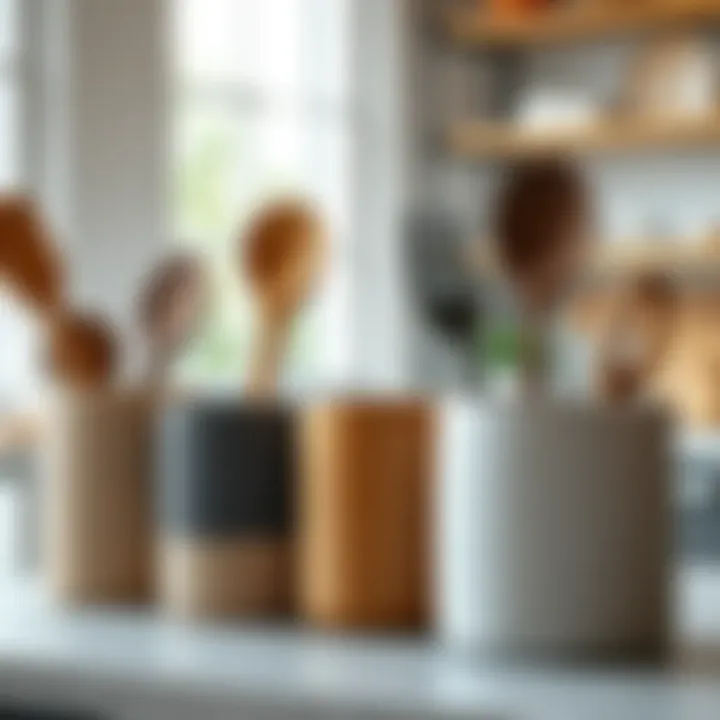
Advantages of wooden holders include:
- Durability: When properly treated and maintained, wooden holders can last for years.
- Aesthetic Appeal: The natural grain of wood adds a unique touch to the decor.
- Eco-Friendly Options: Many wooden products are sourced from sustainable forests, making them a great choice for the environmentally conscious.
It's important to be aware of maintenance, though. Wooden holders may need to be oiled periodically to maintain their integrity and prevent warping. Washing them in the dishwasher is a no-go, as water can compromise the wood. Instead, a damp cloth can do the trick.
Metal Utensil Holders
Metal utensils holders are a popular choice in modern kitchens due to their sleek design and practical properties. They can be found in stainless steel, wrought iron, or aluminum, each offering a distinct look and feel.
The main benefits of metal holders include:
- Resilience: Metal is often resistant to bending and breaking, making these holders robust.
- Easy Cleanup: Most metal holders can be cleaned effortlessly with soap and water, and many are dishwasher safe.
- Variety of Styles: From polished chrome finishes to matte black, metals can suit various kitchen aesthetics.
However, keep in mind that certain types of metal can scratch easily, so it’s wise to consider a holder with a protective coating. Additionally, some metals may rust if not properly dried after washing.
Plastic and Acrylic Options
Plastic and acrylic utensils holders are exceedingly versatile and can often be the most affordable option. They come in numerous colors and designs, allowing for customization that can match various kitchen decor styles.
Benefits of using plastic and acrylic holders include:
- Weight: They are generally lighter than metal or wooden options, making them easy to move.
- Budge-Friendly: These options are often lower in price, making them accessible for all budget ranges.
- Variety of Shapes: Unlike their wooden or metal counterparts, plastics can be molded into unique shapes and sizes.
On the downside, plastic holders might not have the same longevity as wood or metal. Over time, they can scratch or warp, especially if exposed to extreme heat. Another consideration is that they may not have the same upscale appearance as other materials, potentially making them less desirable in more elegant kitchens.
Ceramic and Stoneware Holders
Ceramic and stoneware holders meld aesthetics with function beautifully. These materials often feature artistic designs or colorful glazes, making them standout pieces in kitchen decor.
The perks of ceramic and stoneware utensils holders are:
- Unique Craftsmanship: Each piece can be distinct, showcasing various colors and designs that attract attention.
- Stability: They tend to have a solid weight, preventing tipping and spilling.
- Heat-Resistance: These materials can handle a good amount of heat, making them less prone to warping.
However, they can break easier than the other materials discussed. A careless knock can shatter one of these holders. Also, cleaning requires more caution than with plastics or metals, as abrasive scrubbers can scratch the surfaces.
The choice of material for your utensil holder reflects not just your personal style, but also your commitment to functionality and durability in your kitchen.
Size and Capacity
When it comes to choosing a utensil holder, size and capacity are key factors that can make or break your kitchen organization. A large utensil holder isn't just about holding more tools; it's about making your cooking experience smoother and more enjoyable. In a bustling kitchen, where pots and pans often compete for space, having a well-sized utensil holder can dramatically enhance your cooking efficiency.
The right size provides both functionality and convenience. For instance, a large holder allows you to keep everything—from spatulas to ladles—all in one easily accessible spot. This not only saves time while you're cooking, but it also cuts down on the clutter often seen on kitchen countertops. By effectively utilizing the vertical space, you can free up more room for other essentials, thus giving your kitchen a more organized appearance. A thoughtfully designed holder can act as a centerpiece, showcasing your kitchen tools while maintaining practicality.
Here are some of the benefits associated with selecting the appropriate size:
- Ease of Use: A larger holder allows you to find the right utensil without rummaging through drawers.
- Space Utilization: Properly sized holders better utilize kitchen space, keeping it tidy and attractive.
- Versatility: Larger holders often come with compartments that can accommodate various utensils, mixing tools, and even kitchen gadgets.
Determining the precise size needed for your kitchen depends on several considerations including the number of utensils, kitchen layout, and your cooking style. Carefully evaluating these elements will ensure that you make an informed decision, ultimately contributing to a more functional kitchen environment.
Standard vs. Large Holders
Choosing between standard and large holders can seem like a straightforward decision, but it can be more nuanced. Standard holders, while serving their purpose, might fall short if you have an extensive collection of cooking tools. On the flip side, large holders can take up more real estate on your countertop, which can be a deal-breaker in smaller kitchens.
- Standard Holders: These are typically designed for basic needs. If you only use a few essential utensils, a standard holder may suffice. They often take less space and can fit neatly into smaller kitchen designs.
- Large Holders: If cooking is a part of your daily routine and you employ diverse tools, consider a larger option. These holders can accommodate everything from spoons to whisks and even larger gadgets. They become a focal point in your kitchen.
Ultimately, whether you go for a standard or a large holder should depend on your personal needs and kitchen space. It's like choosing a vehicle; what works for one may not work for another.
Choosing the Right Size
When it comes to choosing the right size, it’s not just about picking the biggest holder you can find. You must consider the overall layout and aesthetic of your kitchen as well.
- Measure Your Space: Before purchasing, measure the counter area where you plan to place the utensil holder. This helps in avoiding the mistake of buying something that will overwhelm your space.
- Consider Your Utensil Collection: Assess how many utensils you own. If you are a passionate cook using various tools, a larger holder might be necessary. Think about your frequently used items and consider their dimensions.
- Think About Functionality: A large holder should enhance functionality rather than complicate it. Opt for designs that allow easy access to all tools. Some holders include compartments for organization which can be a real game changer.
In sum, the size and capacity of your utensil holder significantly affect not only its utility but also your overall kitchen experience. By carefully evaluating your needs and space, you can make a choice that marries function and style seamlessly.
Design Aesthetics
Design aesthetics play a crucial role in how utensil holders integrate into the kitchen space. In an environment where cooking and creativity flourish, the visual appeal of every item, including utensil holders, cannot be taken lightly. Large utensil holders are more than just functional storage solutions; they act as statements that can enhance or detract from the overall flavor of a kitchen's design.
When homeowners, interior designers, and decorators are curating a kitchen's ambiance, they often consider how colors, materials, and styles resonate with one another. A thoughtfully chosen utensil holder can tie together an array of design elements, making it a focal point that draws the eye or a subtle accessory that complements existing decor.
Matching Kitchen Styles
The vast array of kitchen styles necessitates a careful approach when selecting utensil holders. A sleek, modern kitchen may benefit from a minimalist stainless steel or acrylic holder that echoes the clean lines and uncluttered surface typical of contemporary design. On the other hand, a rustic farmhouse kitchen might find charm in a weathered wooden holder that invokes feelings of warmth and nostalgia. Adapting utensil holders to match the kitchen's theme does more than serve a purpose; it creates a cohesive narrative throughout the space.
Additionally, the incorporation of design elements that reflect personal tastes can make the kitchen feel more inviting. For instance, a retro-themed kitchen may feature colorful enamel utensil holders that resonate with vintage aesthetics, creating a sense of playful whimsy. This attention to style can lead to an inviting atmosphere where cooking and gathering become layered experiences infused with personality.


Color and Texture Considerations
Color and texture are paramount in creating visual harmony. The colors of utensil holders should either complement or contrast with other kitchen items. For example, a vibrant red holder can serve as a pop of color against neutral cabinetry, while a soft pastel shade could lend a calming effect to a bustling culinary zone. Choosing color palettes that evoke a desired emotion can subtly influence one’s mood while working in the kitchen.
Texture also contributes to the aesthetics. A smooth ceramic holder can contrast the roughness of a wooden countertop, creating a pleasing balance. Alternating textures adds depth and interest, inviting curiosity rather than monotony. Here, one could easily explore mixing different textures—like pairing a matte ceramic holder with shiny metal utensils—adding a delightful visual jigsaw to the kitchen.
As an essential part of kitchen design, utensil holders should not just fulfill a practical role; they should be a blend of beauty and utility. The decisions made regarding their design can either elevate or detract from the cooking experience. Investing in aesthetically pleasing holders can reshape how one views and interacts with the culinary space.
"Beauty is in the eye of the beholder, but in the kitchen, it can also be in the hand that holds the utensils."
Thus, when considering large utensil holders, think beyond mere function. They are a canvas for personal expression, an opportunity to enhance one’s culinary journey monumentally.
Functionality and Organization
When it comes to creating an efficient kitchen, the importance of functionality and organization cannot be overstated. Having large utensil holders is not simply about aesthetics; it’s about streamlining the cooking process and making your kitchen a more enjoyable space. The right organization of utensils directly affects how quickly and easily you can prepare meals, allowing you to focus on your culinary skills rather than rummaging through clutter.
A well-organized kitchen can transform routine cooking into an art form. By utilizing utensil holders effectively, you’ll save time searching for that spatula or ladle buried under a pile of other tools. Not only do large holders provide ample space, but they also contribute to a tranquil environment by keeping everything visibly arranged. This kind of clarity promotes efficiency and fosters a more relaxed cooking experience, which is crucial when entertaining or managing busy weeknight meals.
Best Practices for Arrangement
Arranging your utensils in a logical manner can make a world of difference. Consider the frequency with which you use certain tools. For instance, place everyday items like spatulas, wooden spoons, and tongs at the front of your utensil holder for easy access. This way, you avoid the hassle of digging around for them when a recipe requires quick action. Lesser-used items such as pastry brushes or melon ballers can be tucked away towards the back.
A few tips for keeping your arrangement effective include:
- Group similar tools together: All cooking spoons in one section, flipping tools in another, and measuring devices grouped together.
- Vary sizes: Use a holder that can accommodate large and small utensils alike so that everything fits snugly without tipping over.
- Utilize dividers: Some large utensil holders come with dividers, helping keep things organized and preventing mixing.
As a best practice, regularly reassess your arrangement. If you find certain tools aren’t being used, it might be time to consider downsizing or rotating them out. This proactive approach to organization keeps your kitchen fluid and adaptable, never stagnant.
Incorporating Other Kitchen Tools
Utensil holders offer more than just a space for spoons and spatulas—they can also be used to house other essential kitchen tools that benefit from easy access. Think outside the box when considering what else can find a home in your large holder. Whisks, ladles, and even cooking scissors can be kept alongside traditional utensils. This synergy ensures you have an all-in-one solution at your fingertips.
Moreover, remember to maintain a balance between aesthetic choices and functionality. If you’re using a wooden utensil holder, it pairs well with similarly-toned cutting boards and towel holders. This promotes a cohesive look that ties the kitchen together while still serving its primary organizational function.
"Maintaining a functional kitchen is an ever-evolving process, requiring constant attention and adjustments to your tools and their placement."
Instead of seeing your utensil holder as just a container, view it as a dynamic component of your kitchen, ensuring that every item has its designated space while enhancing the overall workflow.
For more insights on kitchen organization, consider resources from Britannica on kitchen design principles and tips from Reddit for practical advice from fellow home cooks.
Innovative Storage Solutions
The way we think about storage in our kitchens is changing rapidly, especially when it comes to large utensil holders. In today’s fast-paced world, homeowners often look for solutions that don’t just serve one purpose but provide multiple functionalities. This trend calls for innovative storage solutions that can help save space, increase accessibility, and maintain an attractive kitchen environment.
Why are Innovative Storage Solutions Important?
Adopting innovative storage approaches means looking beyond traditional utensil holders. These solutions often integrate style and functionality, resulting in tools that enhance the usability of your kitchen while contributing to its overall aesthetic. With space becoming a premium in most homes, particularly in urban settings, exploring these solutions become essential. Not only do they help keep your tools organized, but they can also serve as stunning design features that elevate the look and feel of the cooking space.
Multi-Functional Holders
Multi-functional holders are the unsung heroes of kitchen organization. Imagine a utensil holder that isn't just a stationary container but a dynamic piece capable of accommodating diverse kitchen tools. These holders can have compartments specifically designed for different utensil types, allowing for easy access when you need them.
Benefits of multi-functional holders include:
- Space Efficiency: They can replace a few separate containers, thus minimizing clutter on your countertop.
- Versatility: Many models can accommodate utensils, cutlery, kitchen gadgets, and even small food items. This means you can have everything you need at arm’s reach.
- Aesthetic Appeal: Often designed with style in mind, these holders can blend seamlessly with your kitchen decor, acting as both a functional item and a statement piece.
For instance, a bamboo holder with designated slots for spatulas, ladles, and whisks can complement a rustic kitchen while keeping utensils neatly organized. This way, you don’t just have tools stuffed higgledy-piggledy but a well-ordered, easy-to-navigate space.
Wall-Mounted Options
As more individuals gravitate towards minimalist designs, wall-mounted utensil holders are gaining traction. These options free up precious counter space by utilizing vertical areas of the kitchen. Wall-mounted holders range from magnetic strips that hold metal utensils to hooks and racks that can display your favorite cooking tools.
Why Consider Wall-Mounted Holders?
- Space-Saving: By taking advantage of the walls, you can drastically reduce countertop clutter. This also allows for better kitchen flow, making the cooking process more enjoyable.
- Customizability: Wall-mounted options allow for customization. You can arrange your tools in a way that fits your specific cooking habits or kitchen layout.
- Visual Interest: Tools become part of the decor. Imagine colorful utensils displayed against a textured wall or patterns breaking the monotony of a plain surface.
"Innovative storage is not just about what works; it’s about what inspires us daily in the kitchen."
With innovative storage solutions, homeowners are empowered to really rethink their kitchen spaces. By embracing these approaches, kitchens can become not only functional zones but also areas of creativity and design.
Maintenance Tips
Keeping large utensil holders in prime condition requires a bit more than just tossing them on the counter and calling it a day. Their role in a kitchen is akin to a backbone; they support various utensils and contribute greatly to the overall aesthetic of the space. Thus, maintenance becomes essential not just for cleanliness but also for longevity and visual appeal. Regular care can prevent unsightly wear and tear and ensure that these holders remain functional over time.
Cleaning Materials by Type
Different materials used in utensil holders demand thoughtful cleaning approaches to maintain their integrity.


- Wood: Wooden holders need gentle cleaning agents. Opt for a mild soap diluted in warm water. Avoid soaking them as wood can absorb moisture, leading to warping. Wipe with a soft cloth and allow to air dry. Treat with food-safe mineral oil occasionally to keep them nourished and prevent cracking.
- Metal: For metal holders, it's essential to use a non-abrasive cleaner to avoid scratches. A mixture of vinegar and water can help remove stains without damaging the metal finish. Dry immediately after cleaning to prevent rust, especially in humid environments.
- Plastic and Acrylic: These materials are typically more forgiving and can usually stand up to standard dish soap and warm water. However, avoid using bleach or strong chemicals that can cause discoloration. A simple wipe-down is often sufficient.
- Ceramic and Stoneware: Although durable, these can chip or crack easily. Clean with warm, soapy water and a non-abrasive scrubber. Ensure you dry them well afterwards, as prolonged moisture can lead to staining over time.
"Regular cleaning is not just an option; it’s a fundamental part of keeping your kitchen looking its best."
Preventing Damage and Wear
Preventing damage is about being proactive rather than reactive. Here are some strategies to prolong your utensil holder's life:
- Placement Matters: Position your holders away from direct sunlight to minimize fading, particularly in materials like wood and ceramic. This can also prevent overheating of certain plastics which might warp over time.
- Avoid Overloading: Every holder has a capacity. Stuffing it full of utensils can stress the structure, leading to instability or breakage. Be mindful of how many tools you store within them.
- Use Coasters or Mats: If your holder is placed on delicate surfaces, consider using a coaster or mat underneath. This can prevent scratches and damage from moisture or heat.
- Regular Inspections: Periodically check for signs of wear. Look for cracks in ceramic, rust on metal, or warping in wood. Addressing these issues early can prevent larger problems down the line.
- Limit Exposure to Chemicals: Be cautious with where you place your holders. If you frequently use cleaning chemicals in your kitchen, ensure they are not resting in an area where they might become exposed. Chemicals can degrade the quality of the material over time.
By following these cleaning and preventive maintenance tips, homeowners will not only enhance the lifespan of their utensil holders but also contribute to a more organized and visually appealing kitchen environment.
Benefits of Large Utensil Holders
When it comes to kitchen design, large utensil holders play a pivotal role in marrying functionality with style. Available in various materials and designs, these holders not only keep your utensils organized but also contribute to the overall aesthetic of your kitchen. They emerge as unsung heroes in our culinary spaces, providing a range of benefits that enhance our cooking experiences and contribute to better organized spaces.
Enhanced Accessibility
One of the standout benefits of large utensil holders is their ability to enhance accessibility. Consider this: when you're in the throes of preparing a meal, hunting for that particular whisk or spatula can be time-consuming and frustrating. A spacious utensil holder allows all of your tools to be neatly within reach, cutting down on the time spent rummaging through drawers or cluttered countertops.
Why does this matter? The time saved on searching for utensils can be utilized in more meaningful ways, like focusing on the actual cooking or entertaining guests. Imagine hosting a dinner party and being able to whip up dishes without missing a beat because everything you need is just a hand's reach away.
In addition to ease of access, large holders can also prevent wear and tear on your utensils. Tools that are taken in and out of a drawer repeatedly are prone to damage and becoming dull. By keeping them in a purpose-built holder, you can extend their lifespan and maintain their effectiveness.
Space Optimization
Space is often a luxury in kitchens, and maximizing every inch is crucial for homeowners and chefs alike. Large utensil holders serve as a prime space optimization tool, making the best use of your countertop or cabinet space. By consolidating various utensils into a single holder, you immensely simplify your kitchen layout.
A thoughtfully designed utensil holder frees up counter space by minimizing clutter. Instead of multiple containers or jumbled piles, a single large holder can fit neatly in a corner or beside the stove. This consolidation is particularly advantageous in smaller kitchens where every square inch matters.
The aesthetic impact of a well-placed utensil holder shouldn’t be understated either. These holders can be used to complement or contrast your kitchen’s color palette, often serving as decorative accents that elevate the overall design.
"A large utensil holder isn't merely practical; it can also be a statement piece in your kitchen, drawing the eye and adding to the room's charm."
In summary, the benefits of large utensil holders stretch beyond mere organization. They significantly enhance accessibility during cooking and optimize available space, allowing for a functional and pleasing kitchen environment. By investing in a quality utensil holder, you take a step toward a more efficient and stylish culinary space.
Sustainability in Material Choices
As awareness grows about the environmental impact of everyday items, sustainability in material choices for kitchen utensils has become a focal point for homeowners and designers alike. Large utensil holders, often overlooked, play a significant role in this movement. By understanding eco-friendly materials, you can contribute positively to both your kitchen's functionality and the environment. The choices you make not only affect the aesthetics of your space but also influence the larger narrative of sustainable living.
A large utensil holder made from sustainable materials reduces waste and promotes environmental stewardship. It's essential to consider the lifecycle of your selected materials—everything from extraction and production to disposal. Using sustainable materials doesn’t just help the planet; it often results in unique and captivating designs that can stand out in any kitchen setting.
Even if you’re drawn to aesthetic appeal, knowing that your choices are gentle on Mother Earth gives an added layer of satisfaction. The simplicity of a well-crafted wood holder or a stylish ceramic piece can offer peace of mind alongside practicality. Sustainable materials often bring a unique character to your kitchen, each with its own story woven through the fibers of its origin.
Every time you opt for a sustainable choice, you are casting a vote for the kind of world you want to live in.
Eco-Friendly Options
When exploring eco-friendly options for large utensil holders, consider materials like bamboo, recycled metal, and biodegradable plastics. These choices are not only sustainable, but they also present various benefits:
- Bamboo: Fast-growing and renewable, bamboo is naturally resistant to bacteria and offers a sleek look. Its light weight makes it easy to handle, perfect for busy kitchens.
- Recycled Metal: Holders made from recycled materials, such as stainless steel, combine durability with environmental benefits. They are easy to clean and can last for years, reducing the need for replacements.
- Biodegradable Plastics: While traditional plastics can be harmful, advancements in biodegradable options allow for durable and long-lasting holders that breakdown naturally without harming the environment.
Choosing these eco-friendly materials delivers not just utility but also a commitment to sustainable living. As a bonus, many eco-friendly products come with unique design features that can highlight creativity in your kitchen.
Long-Term Value Assessment
Investing in sustainable materials for your kitchen isn't just a flash in the pan—it's about long-term value. Large utensil holders crafted from resilient, eco-conscious materials stand the test of time and provide excellent durability. This can translate into significant savings over the years, as homeowners won't need to frequently replace often low-quality, non-diverse utensils holders.
Consider the total cost of ownership, which encompasses initial purchase price, maintenance, and longevity. Sustainable options may have a higher upfront cost, but their durability and minimal environmental footprint often make them more economical in the long run.
Also, beyond monetary value, the aesthetic and emotional satisfaction derived from owning eco-friendly products can’t be overstated. Every time you reach for your utensils, there’s a sense of pride in knowing your choice aligns with values beyond mere convenience or style.
\
Epilogue: Selecting the Right Utensil Holder
When it comes to designing a well-functioning kitchen, the importance of choosing the right utensil holder cannot be overlooked. Large utensil holders serve not just as storage solutions, but they also play a significant role in shaping the kitchen's overall aesthetic. Selecting the ideal holder requires a thoughtful examination of several aspects: materials, size, design, and functionality. Each element affects not only the holder’s appearance but also its practicality, enhancing your kitchen experience in ways you might not expect.
Key Takeaways
One of the crucial takeaways from this exploration is the need to emphasize adaptability in your selection. Here’s a distilled summary to consider:
- Material Matters: Ensure the material you choose (wood, metal, ceramic, or plastic) aligns with both your kitchen's design and your lifestyle. For instance, wooden holders can bring warmth but may require a bit more maintenance than their metal counterparts.
- Size and Capacity: A large holder offers enhanced storage but think about how much space you have. Oversized holders might dominate a small countertop, while too-small ones can lead to chaos.
- Design Aesthetics: It’s essential that the holder blends seamlessly with other kitchen decor. From rustic to modern styles, your chosen holder should resonate with your overall theme.
- Functionality and Organization: Prioritize organization in your design. Multi-functional holders or those that incorporate other kitchen tools can help optimize your workspace.
Understanding these key elements can simplify the decision-making process, ultimately leading to a choice that enhances both function and style in your kitchen.
Future Trends in Kitchen Storage Solutions
Looking ahead, the landscape of kitchen storage solutions is set to evolve with some intriguing trends. As kitchens become more of a heart within homes, functionality is king.
- Sustainable Materials: There’s a growing demand for eco-friendly options that reflect a commitment to sustainability. Biodegradable or repurposed materials offer not only durability but also an environmentally friendly choice for homeowners.
- Smart Holders: Technology is making its way into kitchen tools. Imagine utensil holders that can store tools and charge devices—this concept is gaining traction.
- Customizable Designs: More homeowners are leaning towards customized solutions that allow for personalization. Modular holders that can adjust to different spaces and needs are likely to become popular.
“As we navigate through an era of sleek functionality and environmental mindfulness, the future of kitchen storage solutions is bound to be both innovative and practical.”
Selecting the right utensil holder might appear a minor task, yet it wields the power to enhance not just your kitchen's look but also its workflow. Keeping an eye on emerging trends can help in making choices that are not only stylish but also forward-thinking.